
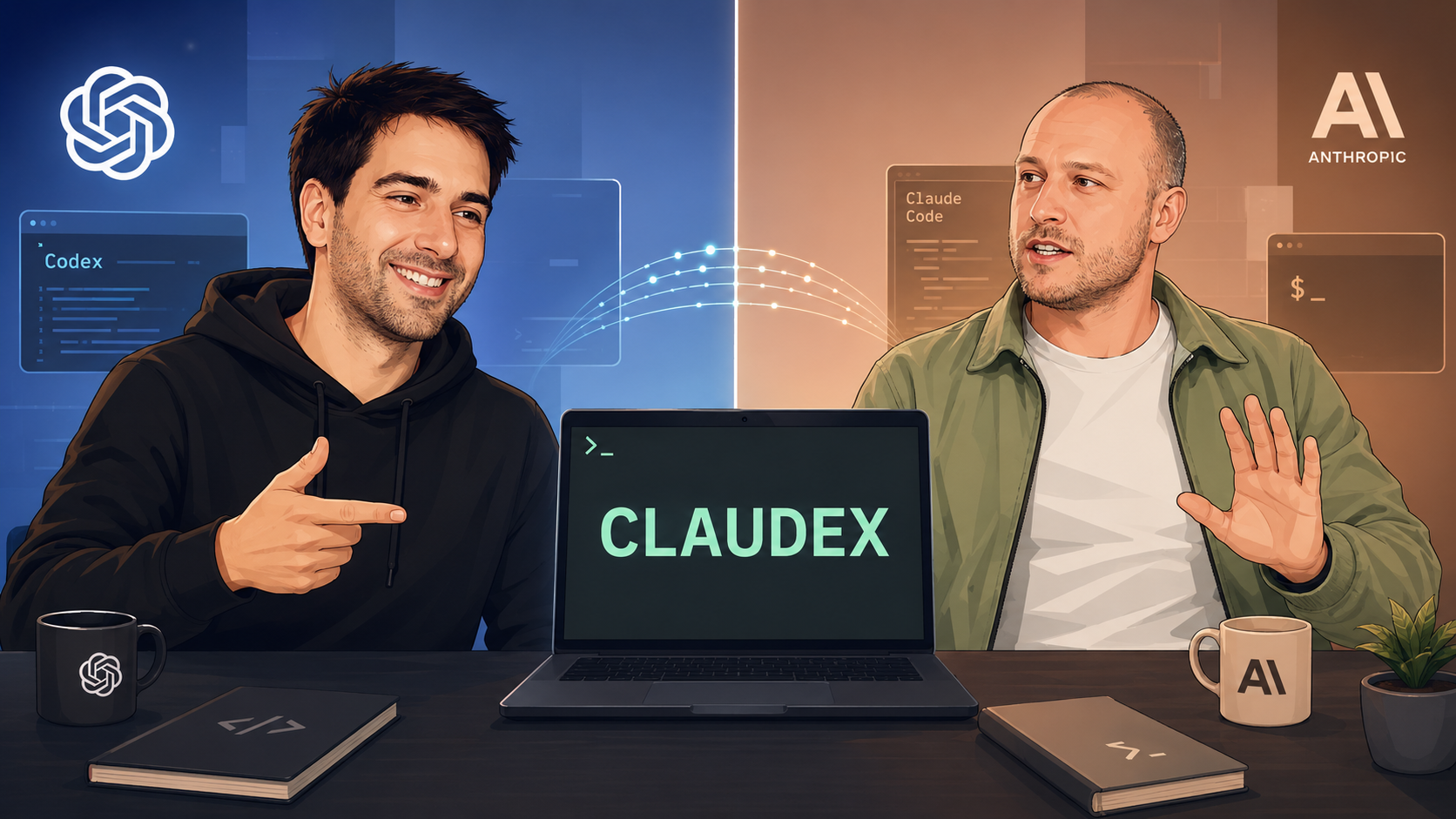
OpenAI’s Tibo and Anthropic’s Boris Cherny got into a public back and forth on X this week after a user said his Claude Code account was suspended for trying something called “claudex,” which essentially means running a model like GPT-5.6 Sol inside Claude Code.

If you build with AI coding tools, this is worth understanding, not because of any drama, but because it touches something a lot of us do quietly already: mixing and matching AI tools instead of staying loyal to one vendor’s ecosystem.
What Is Claudex?
Claude Code is Anthropic’s coding tool. In early July, a developer named Theo found that GPT-5.6 Sol, OpenAI’s coding-focused model, actually performed better running inside Claude Code than inside OpenAI’s own Codex app. He posted the discovery, and Tibo, who leads OpenAI’s Codex team, publicly endorsed the workaround, posting his own step by step guide using a tool called CLIProxyAPI to connect the two. The setup involves creating a command alias, which people started calling claudex, that tells Claude Code to route its work through GPT-5.6 Sol instead of Claude. Tibo has joked twice now about “staying in the presence of your orange crab,” his own nickname for Claude Code, while pointing it at OpenAI’s model.
Why Run GPT-5.6 Sol Inside Claude Code?
The appeal isn’t random, and it comes down to three things.
First, a reported quality edge. Theo ran the same GPT-5.6 Sol model, at the same effort level, through identical prompts in both Codex and Claude Code, and said the Claude Code output was meaningfully better, especially on design work. He couldn’t explain why the same model would behave differently based only on which harness was running it.
Second, there’s a real technical reason behind at least part of that. A GitHub issue on Codex (openai/codex#31814), since closed, documented that GPT-5.6 Sol’s default configuration hid the controls needed to assign a subagent a different model or reasoning effort, so subagents inherited the parent session’s full settings instead. Developers reported this burning through usage fast, since simple subagent tasks ended up running at Sol’s full reasoning power rather than a lighter model. Some Claude Code users report being able to set effort per subagent individually through a proxy setup instead, though that specific comparison comes from community reporting, not official documentation from either company.
Third, people don’t want to rebuild what they’ve already built. Custom skills, subagent patterns, project-level rules, this is workflow scaffolding people have invested real time in inside Claude Code. Claudex lets them keep all of that and just swap which model is doing the thinking.
Worth being careful here though. The “better in Claude Code” claim started from one developer’s viral tweet, not a controlled study.

Independent benchmarking firm Artificial Analysis runs its own Coding Agent Index across labs, and found GPT-5.6 Sol actually scores highest running inside Codex, its native environment, with Claude’s own model close behind running inside Claude Code. That’s each lab’s best model performing on its own home turf though, not the same model tested identically across both harnesses, so it doesn’t settle the specific claim either way.
What Happened This Week
A user named Alex Getman said he followed Tibo’s claudex setup closely and got his Anthropic account suspended shortly after. He tagged Tibo asking for help, and Tibo replied publicly asking if anyone else had run into the same thing, which read to a lot of people as implying Anthropic was punishing users for going outside its ecosystem.

Boris Cherny, who created Claude Code, answered directly. He said Anthropic does not ban people for using its harness with other models, guessed the suspension was a false trigger from an unrelated account classifier, and added that Anthropic is hiring if Tibo wants a job. Tibo came back a bit later announcing he’d reset usage limits for paid ChatGPT Work and Codex users, framing it as a celebration of GPT-5.6 Sol working well “pretty much anywhere, including in the CC harness.”
The tone throughout stayed pointed but not hostile, the kind of exchange that happens on tech Twitter constantly between people who clearly use and respect each other’s products. Two senior engineers publicly sparring, throwing in a hiring joke, and neither one escalating past that.
For builders, the more useful thread here isn’t the back and forth, it’s the claudex trend itself. People are increasingly comfortable running one company’s model inside a completely different company’s tooling, chasing whichever combination performs best for a given task. That’s a meaningful shift from a year ago, when most people picked one AI ecosystem and stayed inside it.
FAQ
What is a “harness” in AI coding tools?
A harness is the interface and orchestration layer that sits around an AI model, handling things like tool use, file editing, and multi-step task management. Claude Code and Codex are both harnesses. The model doing the actual thinking, whether that’s Claude, GPT-5.6 Sol, or something else, can often be swapped inside the same harness, which is exactly what claudex does.
What proxy do people use to set up claudex?
CLIProxyAPI. It sits between Claude Code and OpenAI’s API, handling authentication so Claude Code can send requests to GPT-5.6 Sol instead of Claude. Tibo’s guide walks through installing it, connecting both accounts, and setting a command alias to switch models on demand.
Is claudex against Anthropic’s rules?
Boris Cherny said publicly that Anthropic does not ban accounts for using Claude Code’s harness with other models, and that the suspension in question was likely an unrelated classifier issue. Nothing suggests claudex itself is officially banned.
If you’re experimenting with claudex yourself, the practical takeaway is simple. Keep an eye on your account status after setting up any proxy workaround, and don’t assume a suspension means the hack itself is banned. Right now it looks like an unrelated glitch, not policy.



Leave a Reply