

GPT-5.6 Sol, Terra, and Luna are OpenAI’s three new AI models announced on June 26, 2026, and they represent the biggest structural shift in how OpenAI names, prices, and releases its models yet. There is also a detail buried in the announcement that most coverage is glossing over: the US government had a say in who gets access first. But we will get to that.
Here is everything you need to know about what these models are, what makes them different, and what it actually means for people who use AI tools day to day.
What Are GPT-5.6 Sol, Terra, and Luna?

For the first time, OpenAI is not releasing a single model. They are releasing a family of three, each sitting at a different capability level.
Sol is the most powerful of the three. Terra offers a balance of efficiency and capability for everyday work. Luna is built for speed and affordability, designed for high-volume use cases.
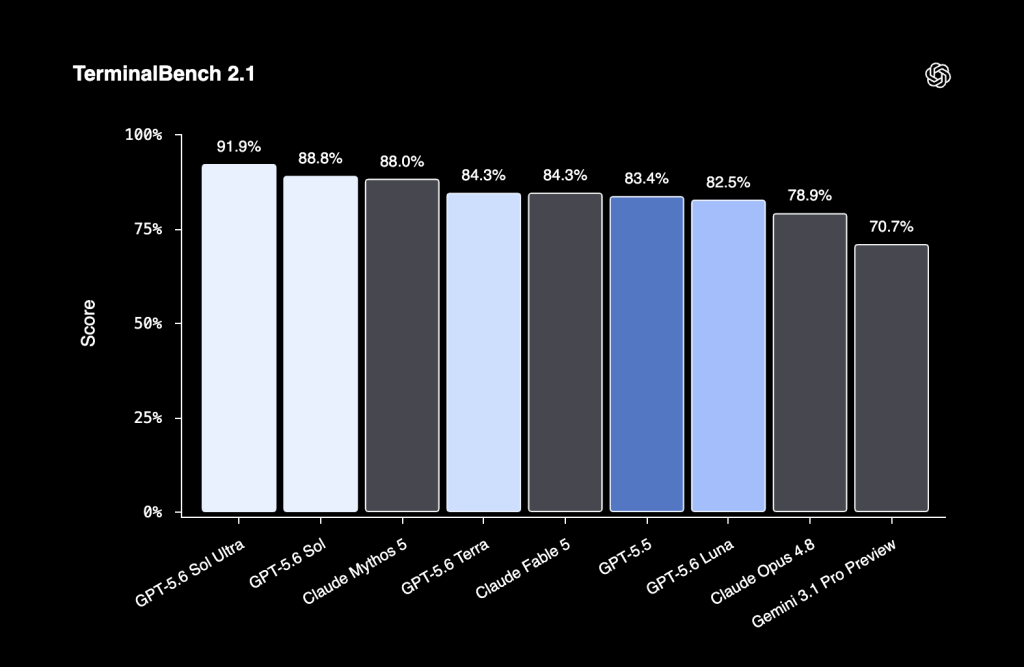
The naming is intentional and permanent. In this new system, the number identifies the model generation, while Sol, Terra, and Luna identify durable capability tiers that can each advance on their own cadence. Think of it like a product line rather than a single product. OpenAI is signalling that future releases will follow this same structure, so the tiers will stay even as the models underneath them get updated.
Why Does This Matter?
Before GPT-5.6, if you wanted OpenAI’s best model, you had one option and you paid a premium for it. Now there are three clearly labelled lanes depending on what you actually need.
Terra delivers competitive performance compared to the previous generation GPT-5.5 while costing half as much. Luna brings strong capability at the lowest price point in the series. For small businesses, freelancers, and developers building tools on top of OpenAI’s API, that cost difference is significant. You no longer have to pay flagship prices for work that does not require a flagship model.

The pricing breaks down as follows across one million tokens: Sol is $5 input and $30 output, Terra is $2.50 input and $15 output, and Luna is $1 input and $6 output. Luna in particular is priced aggressively and is clearly aimed at anyone running AI at scale, where cost per task adds up fast.
The Government Angle That Everybody Is Talking About
This is the part of the announcement that deserves more attention.
OpenAI delayed the full public launch of GPT-5.6 at the US government’s request, limiting initial access to a small group of vetted partners whose details were shared with the authorities.
GPT-5.6 is currently available as a limited preview to around twenty companies whose participation has been approved by the government. OpenAI expects to expand access to more companies next week, with a broad release in the coming weeks.
Why? The decision reflects growing concern in Washington over the national security risks posed by powerful AI systems. By securing early access to frontier models, US officials are aiming to identify threats ranging from cyberattacks to military misuse before the tools are widely deployed.
OpenAI is not pushing back on this, at least not publicly. But they did make their position clear. The company stated it does not believe this kind of government access process should become the long-term default. They are complying now, but they are on record saying they want this to be a temporary arrangement rather than a permanent framework.
This is genuinely new territory. AI companies being asked to run their model releases past a government before going public is not something that was happening a year ago.
How Capable Is GPT-5.6 Sol Actually?
Sol is OpenAI’s most powerful model to date. OpenAI plans to add options for extended reasoning as well as an ultra mode that splits work across multiple sub-agents.
On the safety side, OpenAI is classifying all three models as High capability in both cybersecurity and biological and chemical risk under its Preparedness Framework, though none of them reach the Critical threshold. In plain terms, Sol is powerful enough that OpenAI built its most robust safety stack to date around it, but it does not cross into what the company considers genuinely dangerous territory.
OpenAI believes GPT-5.6 Sol is better at helping users find and fix security vulnerabilities than it is at carrying out end-to-end attacks, and says this does not meet the critical cybersecurity risk level defined as bringing unprecedented new pathways to severe harm.
Also worth noting for developers: GPT-5.6 Sol is set to launch on Cerebras hardware at up to 750 tokens per second in July, bringing frontier level intelligence to users at speeds that were not previously possible.
When Can You Actually Use It?
Right now, most people cannot. During the preview period, GPT-5.6 models will initially be available to a limited group of trusted partners as OpenAI continues testing and coordinating ahead of a broader release.
The public rollout is expected within the coming weeks. When it does arrive, expect the same pattern OpenAI has followed with recent releases: ChatGPT access first, then API access, then wider availability across plans.
If you are a ChatGPT Plus, Pro, Business, or Enterprise subscriber, you will likely be among the first wave when the gates open.
FAQ
What is the difference between GPT-5.6 Sol, Terra, and Luna?
Sol is OpenAI’s most capable and most expensive model in the GPT-5.6 family, built for complex, high-stakes tasks. Terra sits in the middle, offering similar performance to the previous generation GPT-5.5 at half the cost. Luna is the fastest and cheapest option, designed for high-volume work where speed and cost efficiency matter more than raw capability.
When will GPT-5.6 be available to the public?
OpenAI has not given a specific date, but has said a broad public release is expected in the coming weeks following the current limited preview. ChatGPT subscribers on paid plans are expected to get access first when the rollout begins.
Why is the US government involved in the GPT-5.6 release?
US officials asked OpenAI to limit the initial rollout so the government could assess the models’ capabilities before they became widely available. The concern centres on potential national security risks, particularly in cybersecurity. OpenAI is cooperating but has stated publicly that it does not want this to become a permanent part of how AI models are released.
The Takeaway
GPT-5.6 Sol, Terra, and Luna are a meaningful step forward, both in capability and in how OpenAI structures its model lineup. The three-tier system makes it easier to match the right tool to the right task, and the pricing on Terra and Luna in particular makes powerful AI more accessible at scale.
But the bigger story here might be the government involvement. The idea that a US administration can request a gated rollout of a commercial AI product before the public gets access is something worth watching closely. Whether that becomes a one-off arrangement or a template for future releases will shape how the entire AI industry operates from here.
The models are coming. The question is just who decides when the rest of us get to use them.
Stay up to date with AI news that actually matters at newsletter.augustwheel.com



Leave a Reply