
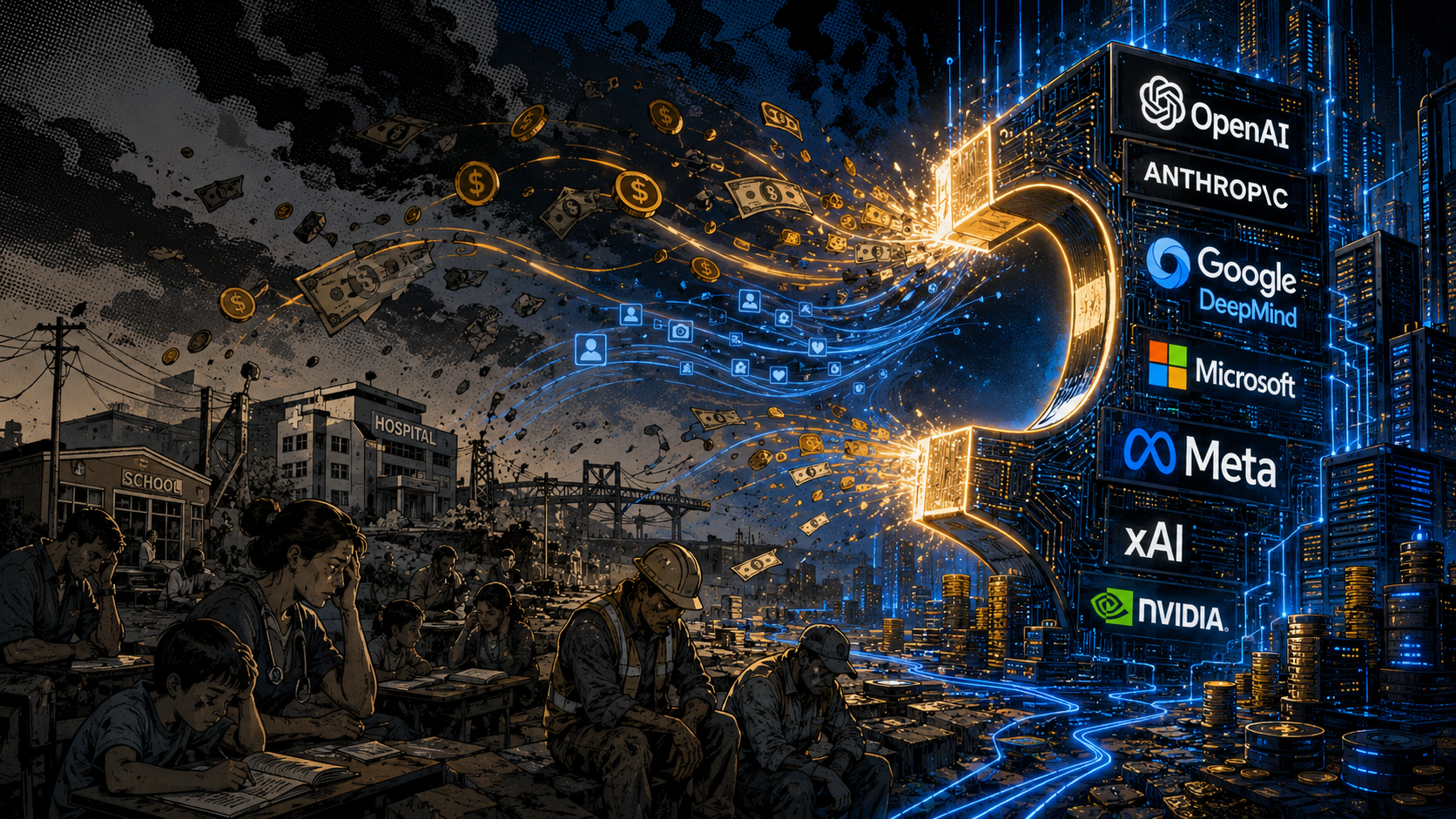
The intelligence curse. Of the many things I don’t know, that is one of them. The wording seems to be quite an oxymoron. An intelligence which is a curse. What does that even mean? That’s exactly what came to mind when I first saw it on TikTok, during one of my Sunday morning lazing in bed scrolling. I’ll tell you what it means. It is a term used to refer to how AI growing in intelligence shifts the focus of government resources from humans to the AI ecosystem. But I’m oversimplifying it. The intelligence curse was something I first heard from Tristan Harris, a tech ethicist who’s been carrying the idea everywhere from Davos to NPR to Bill Maher’s show. So let’s break down what it actually means, and whether the alarm is justified.
Why This Actually Matters To You
This isn’t another “robots are coming for your job” post. The intelligence curse is a different worry entirely. It’s not about whether AI can do your job. It’s about whether your government and your employer still have a financial reason to care about you once AI can generate wealth without you.

That distinction matters because it changes what you should actually be paying attention to. Job automation is a skills question. The intelligence curse is an incentives question, and incentives are a lot harder to negotiate with.
Where The Term Actually Comes From
Tristan Harris didn’t coin this. It comes from a 2025 essay by Luke Drago and Rudolf Laine, who borrowed a concept economists already had a name for: the resource curse.
You’ve probably heard of it without realizing it. Countries that strike oil or diamonds often end up worse off for their citizens, not better. Venezuela, parts of the Democratic Republic of Congo, and others have massive natural wealth and struggling populations, because once a government’s revenue comes from extracting one resource, it loses the incentive to invest in its people. The wealth doesn’t need the population to flow.
Drago and Laine’s argument is that AI could do the same thing to entire economies, just with intelligence instead of oil. If a country’s GDP increasingly comes from AI companies and data centers rather than from people working and paying taxes, the government loses its reason to fund education, healthcare, or social programs. Not out of cruelty. Out of incentive structure.
Why It’s Suddenly Everywhere
Harris has been saying this on basically every major podcast since February, from a Davos panel with AI researcher Yoshua Bengio, to Bill Maher’s show, to a long conversation with Sam Harris. None of that crossed my feed.
What did was a clip from Fast Company’s new series called Adventures in AI, where Harris sat down with filmmaker Daniel Kwan. That video published mid June, and within days it was the version of this idea showing up on TikTok timelines, mine included. The concept had been building in policy circles for months. This was just the clip that broke containment.
Is The Money Part Actually True
In the Fast Company clip, Harris makes a sharper claim. He says AI companies have taken on enormous debt, and the only way they can realistically make that money back is by replacing human labor entirely, not by selling subscriptions.
I went looking for the actual numbers rather than taking that at face value, and the honest answer is yes, mostly, with a caveat worth knowing.
The debt part checks out. OpenAI alone has committed somewhere around one trillion dollars in infrastructure spending against roughly thirteen billion dollars in actual 2025 revenue. The Bank for International Settlements has flagged this exact shift across the AI industry, from companies funding growth out of cash flow to funding it through debt. That’s not activist commentary. That’s a central bank warning.
The labor replacement part is murkier, but not invented. OpenAI’s own charter defines artificial general intelligence as systems that outperform humans at most economically valuable work. That’s their language, not Harris’s. So when he says the business model depends on replacing labor, he’s reading their own stated goal back to them.
Where I’d push back a little is the word only. Plenty of economists and even some AI researchers think there’s a real path to profit through augmenting workers rather than fully replacing them, and the more immediate concern on Wall Street right now isn’t actually labor replacement. It’s something called circular financing, where chip makers and cloud providers invest in AI startups who then spend that exact money buying chips and cloud capacity from the same companies that invested in them. That’s a demand question more than a labor question, and arguably the bigger near term risk.

What You Can Actually Do With This
You’re not going to fix global AI incentive structures from your kitchen table, and neither am I. But there are three things worth doing with this information rather than just feeling unsettled by it.
First, separate the timeline from the trend. The intelligence curse describes a direction, not a date. Nothing about this means it happens next year, or even this decade.
Second, watch the spending math, not the hype. If AI companies start missing revenue targets against these debt commitments, that tells you more about the real timeline than any podcast clip will.
Third, get genuinely useful with these tools now, while the augmentation phase is still the dominant one. The workers who get displaced first tend to be the ones who never engaged with the technology at all, not the ones who understood it early.
Quick Answers
What is the intelligence curse?
It’s the idea that as AI generates more of a country’s wealth, governments and companies lose the financial incentive to invest in their people, the same dynamic seen in resource rich countries that neglect their citizens.
Who came up with the intelligence curse?
Luke Drago and Rudolf Laine, in a 2025 essay series. Tristan Harris has popularized it through interviews and podcasts, but he isn’t the original source.
Is OpenAI’s business model really built on replacing workers?
Their own charter defines the goal as systems that outperform humans at most economically valuable work, which supports Harris’s framing, though calling it the only path to profit overstates how settled that question actually is.
Takeaway
I went into this expecting to find a scary sounding phrase with not much behind it. Instead I found a real economic argument, real debt numbers, and a genuinely honest debate among people who actually study this for a living. That’s rarer than it sounds in AI commentary right now.
If you want me tracking these threads as they develop, instead of catching them three months late on TikTok like I did this one, that’s exactly what the newsletter is for. Sign up at newsletter.augustwheel.com.




Leave a Reply